A house that quietly does the right thing
Home Assistant at the centre, Zigbee and a few Wi‑Fi devices around it, and a rule I keep coming back to: an automation that a guest has to be warned about is a bug.
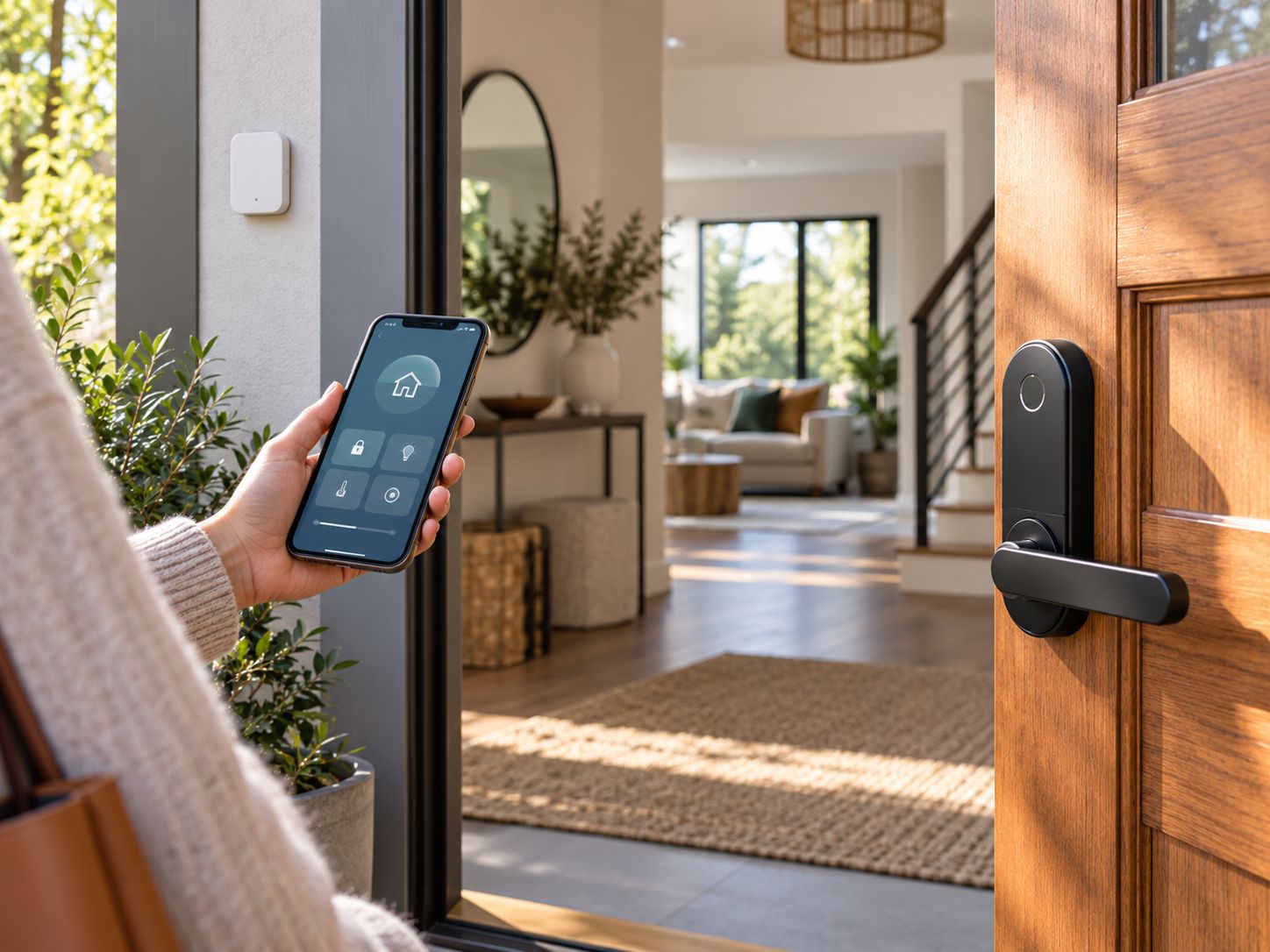
Why
The first motivation was small: the hallway light switch is in the wrong place and always was. The second was the twins. Night feeds at 3 a.m. are easier when the kitchen lights come on at 10% instead of 100%, and when the heating knows that somebody is awake.
The deeper reason is the same one that makes me enjoy architecture work. A home is a distributed system with unreliable nodes and a very demanding user base. Getting it to feel calm is a design problem.
Principles
Local first: nothing essential depends on a cloud account. Physical switches keep working if the server is off. Every automation has a name a non-engineer would understand, and a single place to turn it off.
Components and tools
- Hub
- Home Assistant OS on Proxmox, [mini PC model]
- Radios
- Zigbee coordinator over USB; Thread border router under evaluation
- Lighting
- Zigbee bulbs and in-wall relays behind the existing switches
- Climate
- Smart TRVs on radiators, one temperature sensor per room
- Presence
- mmWave sensor in the living room, door sensors, phone presence as a fallback
- Network
- Three VLANs: trusted, IoT, guest; mDNS reflector between the first two
- Backups
- Nightly snapshots to the NAS, monthly restore test
How the pieces talk
Dashed boxes are things I do not control.
Project log
Most recent first. The log is the project.
Thread border router trial
Added a border router to test Matter-over-Thread devices. Pairing is better than Zigbee; range in a concrete building is not. Keeping both for now.
Guest mode
One switch that disables presence-based lighting and motion-triggered scenes for 48 hours. Should have built this before the first guest, not after the third.
mmWave replaces PIR in the living room
PIR kept turning lights off on people reading. mmWave sees a still person. Mounted on a printed bracket that hides the cable.
VLAN migration, done in one evening and two more mornings
Everything that only needs the internet moved to the IoT network. The vacuum lost its map once. Full notes in the blog.
Night-feed lighting
Between midnight and 6 a.m., any motion in the kitchen gives 10% warm light for 8 minutes. The single most appreciated automation in the house.
- 2022 to 2025Entries 1 to 18
Three bulbs, then a hub, then the realisation that the Wi‑Fi plugs were phoning home. Show earlier entries
Lessons learned
- 01Keep the physical switches. The best automation is one nobody needs to know exists.
- 02Presence is a definition, not a sensor. Write down what “home” means before buying hardware.
- 03Segment the network early. Migrating later means re-pairing everything.
- 04Test the restore, not the backup.
Related writing
Smart home
Presence detection without a camera in every room
, 9 min EN
Smart home
VLANs for a flat: what I would do differently
, 11 min EN
3D printing
Printing sensor mounts that match the skirting board
, 6 min EN